

June 23, 2026
Festival Season Is a Content Strategy Now
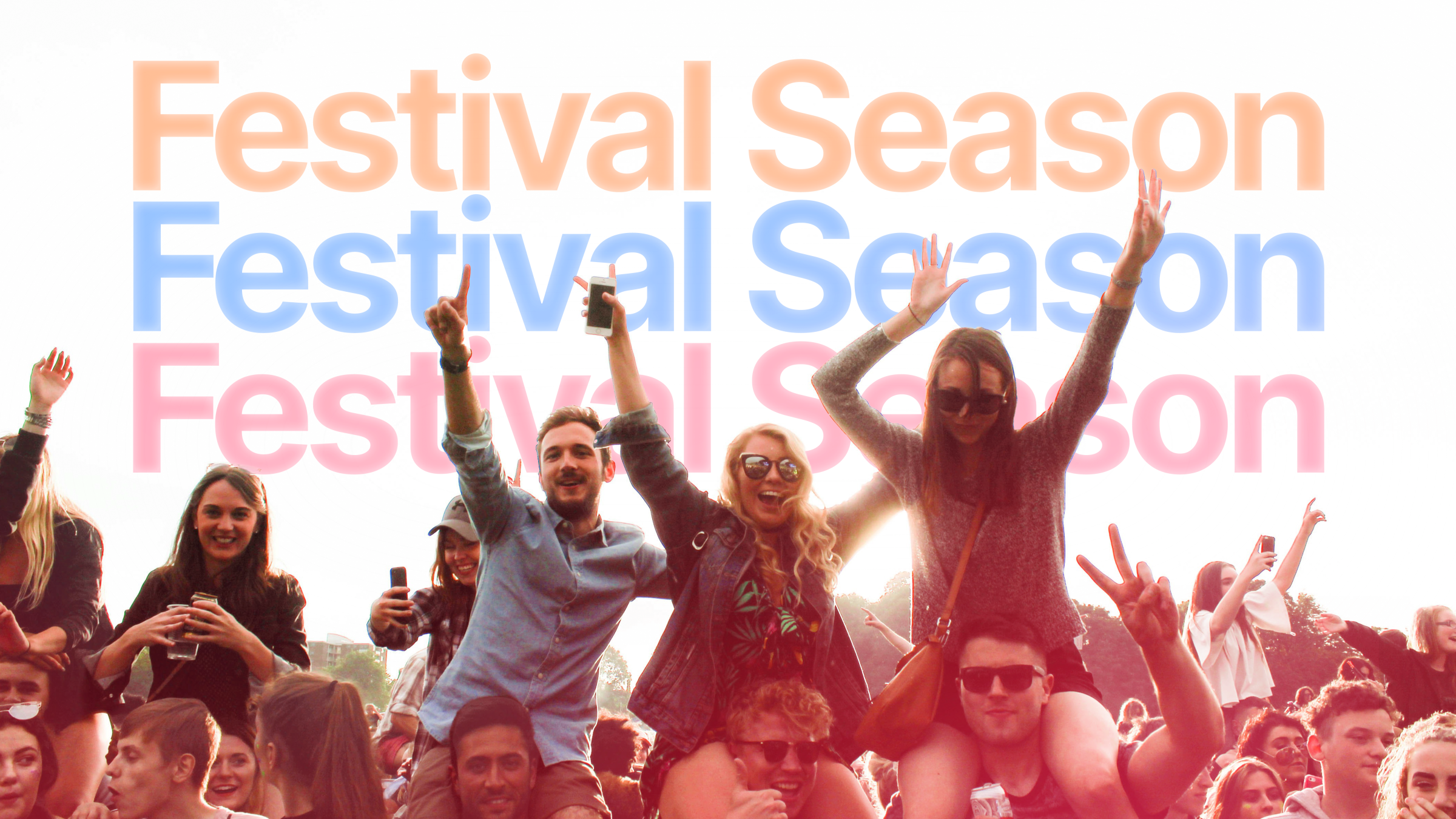
Every April, social feeds get taken over by the desert. Coachella 2026 dominated feeds for weeks, running well past the final weekend through creator hauls, brand recaps, GRWM videos, and highlight reels that kept cycling through the algorithm long after the stages went dark…and that’s the point.
Festival season has quietly become one of the most competitive content windows of the year, and the brands, platforms, and properties treating it like a production strategy are pulling further ahead of the ones that still think of it as a sponsorship opportunity.
@alixearle PLEASE PLEASE PLEASE play please please please
♬ original sound - Alix Earle
@katiefanggg DAY 1 YAY @Patrick Ta Beauty @matthewrctaylor @Revice ♬ original sound - Katie Fang
This shift matters to anyone leading social or content strategy in sports, entertainment, or culture-driven marketing. The way audiences experience festivals in 2026 is fundamentally different from five years ago, and the gap between brands that understand that and brands that don’t is visible in real time, on every platform, every weekend from April through August.
The Festival Is the Content Brief
2026 is shaping up to be a landmark year for live cultural experiences, with major music festivals, creator conventions, and fan gatherings all converging into what’s essentially a nine-month content calendar. For social leaders, that’s both an opportunity and a pressure test.
The audience attending these events in person is now a content-creation crew. Fans film, post, caption, and share in real time, which means the on-site experience is feeding social platforms simultaneously. For brands, this creates a real challenge as activations aren’t being evaluated on how they feel in person, they’re being evaluated on how they translate to a 15-second vertical video.
What’s driving Coachella’s reach in 2026 is the creators moving through those activations. A brand can spend seven figures on an immersive on-site experience and generate almost no lasting social reach if the activation wasn’t designed with content creation in mind from the start. The brands getting the most out of festival season are designing backwards, starting with the content output and building the physical experience to support it.
What Fitting Naturally Actually Looks Like
There’s a useful way to separate festival activations in 2026, and that is 1. brands that showed up with something to say, and 2. brands that showed up to be seen.
Gap’s Hoodie House was a strong example of the former. The activation felt authentic to the brand’s identity, simple, high-quality, and understated, and it gave creators something genuinely wearable and shareable to build content around. The constant lines and extremely high demand made Gap hoodies one of the most recognizable visual elements of the weekend, without the brand having to manufacture a viral moment. The product did the work because the format was designed for how content gets made.
@jacqbanal @Gap stays winning!!! this was THE activation to check out during Coachella weekend 1. there was a longggg line the entire weekend, so if you were deciding if it’ll be worth the wait… let this be your sign 💙 #coachellaweekend2 #coachella2026 #festivalmerch #gap #coachellamerch ♬ Love Drought x Video Phone x Intl Players Anthem - Jacobdior
@wongvlogz We waited a total of 3 hours for the GAP x Coachella hoodie. Chat, was it worth it? 🤷🏻♂️ #coachella #gap #festival #gaphoodie ♬ original sound - alex :)
Rhode’s activation at Coachella followed a similar logic. Rhode World was built around the brand’s existing ecosystem, so creators who were already part of that community produced content that felt organic rather than transactional. That’s the distinction social leaders should care about, when a creator posts from your activation because they genuinely want to, the content hits differently than when they post because they’re fulfilling a deliverable.
@kayla.ryann the biebers are taking over Coachella day 2 😵💫💋 @rhode skin @Hailey Bieber #coachella #rhode #coachella2026 #trending ♬ original sound - kayla ryan
@isaasung @rhode skin so cute 🧡💚💗💛 #rhode #bieberchella #coachella #haileybieber ♬ original sound - isa
Heineken’s Clinker activation showed how a brand with years of festival presence can evolve its approach without abandoning what makes it work. Heineken turned a simple beer cheers into a tech-driven social experiment by giving participants a smart band that lit up when the person they were clinking drinks with shared similar music taste, synced to Spotify or YouTube Music. It’s a small idea with a strong social mechanic, and it gave creators an organic story to tell about a moment they actually experienced rather than a product they were asked to feature.
@bustle Went to #Coachella for the music… left with my music twin! Come with Bustle’s Senior Social Media Strategist @Gracie Farquhar to find her match at the @Heineken ♬ Make Me Feel - John Summit
Pinterest pulled off something harder: a genuinely counterintuitive move that earned its own conversation. A social media platform built a phone-free activation at one of the most photographed events in the world, inviting people to step away from their screens and into a physical version of its festival trend data. The activation earned outsized buzz precisely because it felt like a genuine expression of the brand’s values rather than a conventional engagement play. That’s a level of brand confidence most marketing teams talk about but rarely execute.
@adweek As @coachella 2026 comes to an end, so do the stunning brand activations. We got an exclusive look inside @pinterest’s phone free activation and here’s what we saw. #coachella #pinterest #brandactivation ♬ Originalton - 𝓕𝓱01
When It Feels Forced
When multiple creators attend the same events, wear similar outfits, and follow the same content formats, feeds begin to blur. The result is saturation rather than storytelling, and audiences are sharper than they used to be about the difference between a creator who genuinely wanted to be somewhere and one who was placed there as part of a distribution strategy.
@juliabroome PERSONAL BRAND LESSONS from coachella 💖👀📢 #coachella #influencer #branding ♬ original sound - julez | social media
@luisalangeisajoke I’m tired of it!!!! #coachella #influencer ♬ original sound - Luisa Lange
Brands are increasingly emphasizing fit and authenticity over trying to get the biggest name, according to research from creator marketing platform CreatorIQ. A creator who has no real connection to a brand or event tends to produce content that reads as transactional, and audiences pick up on it quickly. The content gets made, but it doesn’t build anything.
The festivals where forced activations stand out most are the ones with enough cultural weight that the gap between earned presence and purchased presence is obvious. Coachella has that weight. VidCon has it in the creator economy space. When a brand shows up at either of those events without a clear reason for being there, without a product, a story, or a community connection that makes sense in context, it tends to produce content that fades fast, even if the activation looked impressive from the outside.
Creator Culture and the VidCon Variable
While Coachella dominates the conversation in April, the back half of festival season brings a different kind of opportunity that social leaders in sports and entertainment haven’t fully explored yet.
VidCon celebrates its 15th anniversary at the Anaheim Convention Center this June, positioned as the world’s largest gathering dedicated to digital culture, and it’s evolving in ways that matter directly to brand strategy. The 2026 edition introduces a Brand Match Accelerator, an invitation-only networking program specifically designed for brand-creator partnerships, which signals how seriously VidCon is treating the commercial infrastructure around creator culture.
Over 100 brand exhibitors participate at VidCon Anaheim annually, spanning technology, consumer goods, media, and creator services. Technology platforms, including YouTube, TikTok, Instagram, and emerging platforms, use VidCon as a major announcement venue, revealing new creator tools, monetization programs, and algorithm updates, which means VidCon functions as an intelligence event as much as a cultural one.
For social leaders in sports and entertainment, VidCon presents a particular kind of value that Coachella doesn’t in that it gives direct access to the creators who are already building audiences in your space, combined with a real-time signal about where platforms are heading next. The brands showing up at VidCon with a clear creator partnership strategy and genuine community investment are positioning themselves well ahead of those who arrive expecting a trade show dynamic.
40% of total influencer marketing budgets are now dedicated specifically to micro-influencers, and 73% of marketers plan to invest in long-term influencer and ambassador partnerships instead of one-off deals, both trends that VidCon is built to support. If your brand’s creator strategy still runs on one-off activations, festival season is a useful moment to pressure-test that model.
The Reach That Lives Beyond the Venue
One of the most underappreciated aspects of festival activations is how much reach is generated by people who weren’t there. The Coachella YouTube livestream drew a massive remote audience alongside the 250,000-plus on-site attendees, and creator content from the weekend travels for days or weeks through recommendations, reposts, and algorithmic distribution. An activation designed only for on-site impact is capturing a fraction of the opportunity.
Google’s approach at Coachella 2026 illustrated this well, with a dual strategy that worked both on the ground and in millions of people’s pockets simultaneously. An AI-powered photobooth served the in-person crowd with personalized portrait transformations, while Google Gemini was embedded into the official Coachella livestream app to serve as a personalized artist discovery engine for remote viewers. The same brand moment reached two completely different audience behaviors at the same time.
That kind of thinking, designing for both the room and the feed, is where festival strategy is heading. It’s also why social teams need to be in the room when these activations are being planned, not brought in after the fact to document what someone else built.
What This Means for How You’re Resourced
Here’s the operational question festival season raises for social leaders: are your teams set up to move at the speed the content window requires?
Festival activations live and die in the first 24 to 48 hours. A moment that doesn’t get captured, edited, and distributed within that window loses most of its potential. That means having production capacity on-site, a clear distribution plan by platform, and enough creative flexibility to respond to what’s actually happening rather than only what was storyboarded in advance.
The most effective festival strategies involve working with micro and nano-influencers who can drive hyperlocalized engagement, which also requires a different kind of creator management than a single high-profile partnership. It means more coordination, more content review, and more real-time communication across a distributed creator network.
For agencies and in-house teams alike, festival season is a useful stress test for how well the content operation actually functions when speed and quality both matter. The brands that come out of it with strong results tend to be the ones that planned for execution as rigorously as they planned for ideation.
The Strategic Lens Going Forward
Festival season in 2026 rewards brands that have done the cultural homework, the ones that understand what a specific event means to its audience, why a creator’s following would care about that brand’s presence there, and what kind of content will actually travel. It rewards brands that build activations around what creators need to tell a good story, rather than what the brand wants to say about itself.
The broader shift is that audiences can tell when a festival presence is earned and when it’s purchased. That doesn’t mean paid partnerships are a problem, it means the best ones are indistinguishable from organic ones because the brand genuinely belongs in the conversation. Getting to that point takes strategy, community investment, and creative work that starts well before the festival calendar opens.
Conclusion
Festival season has expanded into one of the most important and competitive content windows of the year for brands operating in sports, entertainment, and culture. The events themselves, from Coachella to VidCon, have become structured content opportunities where the quality of your activation, the authenticity of your creator strategy, and your team’s operational readiness all get tested simultaneously and publicly.
The brands seeing the most durable results from this space are the ones thinking about it strategically rather than reactively. They’re designing for the feed from the start, investing in creator relationships that go beyond a single event, and building teams with the capacity to execute at the pace the content cycle demands. If festival season still feels like a sponsorship decision rather than a content strategy decision for your organization, that’s worth examining before the next calendar opens.
If you’re building your festival content strategy or looking for a partner who understands how to activate in cultural moments that actually matter, talk to the STN Digital team.