

August 11, 2026
Your Fans Never Left the 2000s, and Brands Finally Noticed
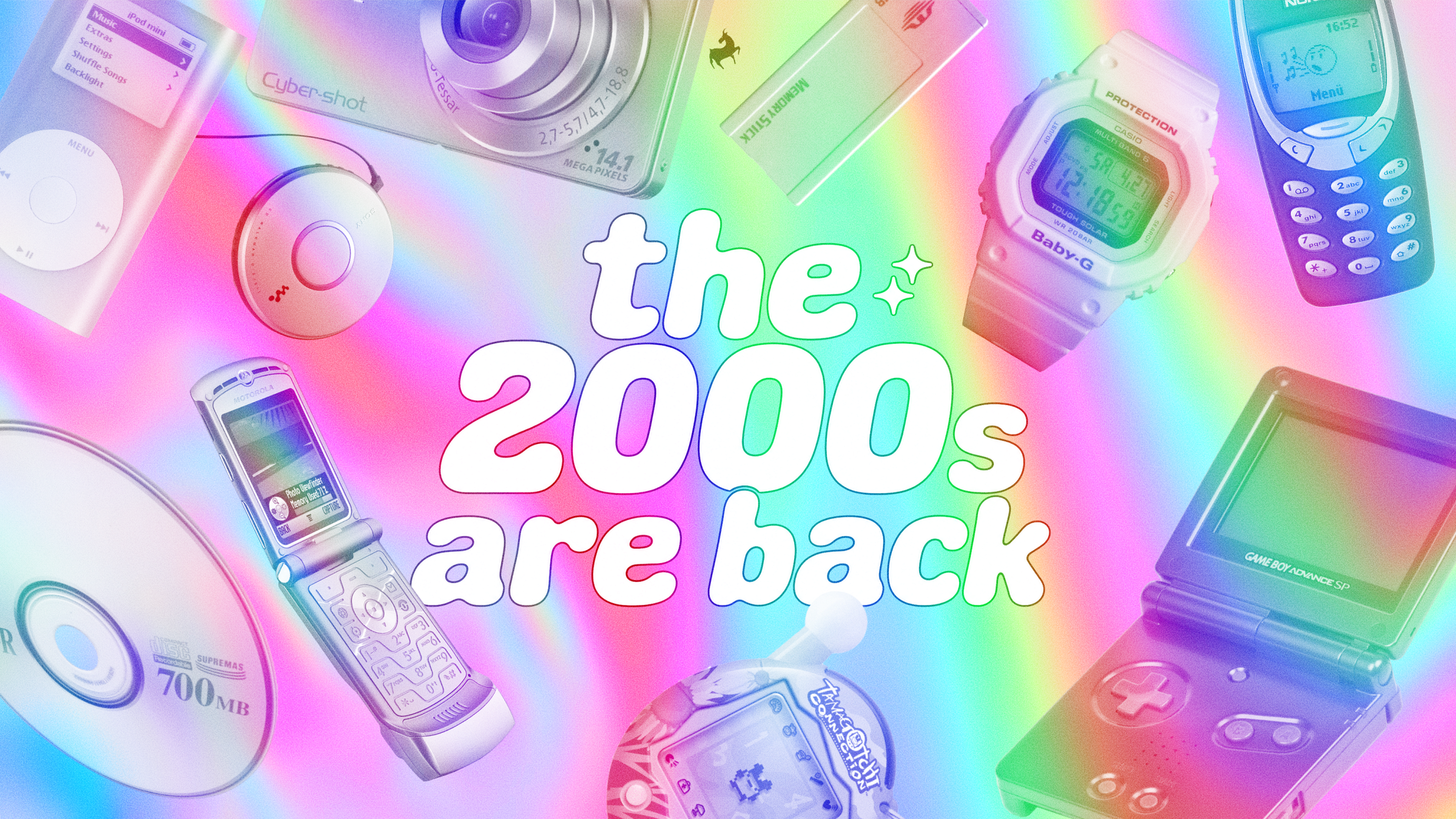
A fifteen-year-old on TikTok can sing every word of “I Want It That Way” without ever having owned a CD. She’s never seen an actual Blockbuster, but she knows exactly what one looked like because a brand built a pop-up recreating one for her. That gap between lived experience and cultural fluency is where a lot of the smartest marketing in sports and entertainment is currently living, and it’s worth understanding why.
Nostalgia has always been part of the marketing toolkit. What’s different right now is the scale and the audience. Gen Z is the one actually driving it, often for eras they never lived through, and the platforms are rewarding it at a volume that’s hard to ignore. TikTok’s own trend data showed nostalgia-related hashtags pulling in 3.2 trillion views over a single year, with Y2K aesthetics, 90s kid content, and vintage ad callbacks among the fastest-growing tags on the platform. A separate brand perception study found that positive sentiment toward nostalgic branding had climbed to 74 percent among Gen Z respondents, with Y2K visuals, early 2000s cartoon revivals, and analog photo filters ranking as the strongest triggers.
For anyone building content strategy in sports and entertainment, that’s a meaningful signal. Fan bases are already wired for this kind of emotional shorthand, whether it’s a franchise anniversary, a legacy jersey, or a walk-up song from twenty years ago, and all of it taps into the same instinct that’s currently selling out Backstreet Boys residencies.
The Concert Circuit Is Where This Shows Up First
Music has been the clearest proof point, and it’s less about aesthetics than it looks. Backstreet Boys built an entire Sphere run in Las Vegas around the concept, branded “Into The Millennium,” leaning fully into the era that made them a household name rather than distancing from it. For the fans who screamed for them in arenas as kids and never quite got over it, it was more than just a costume party. It’s a chance to actually be in the room this time, with the means and the freedom to show up for something they loved before anyone told them it was uncool.
@backstreetboys Daddy Kev is finally ready for take off…
♬ Originalton - donjeta
@kortneyspears Backstreets back, baby! #NYE #backstreetboys #2026 #happynewyears #lasvegastiktok @Backstreet Boys @Backstreet Boys Sphere Clips ♬ original sound - KORTNEY SPEARS
Hilary Duff is telling a similar story. Her last major tour wrapped in 2008, and she’s out this year with The Lucky Me Tour, her first new album in over a decade. The crowd showing up grew up on Lizzie McGuire, and a lot of them are bringing their own kids now. These are millenials getting to revisit a piece of their own childhood as an adult, on their own terms, and pass a version of it down.
@laurjacksonn she’s STUNNING . and the dress i #hilaryduff #lizziemcguire #theluckymetour #concerts #lizziemcguiremovie ♬ original sound - lauren
@genieprestler Hilly in Philly! @hilaryduff #hilaryduff #concert ♬ original sound - Genie Prestler
@realrahmah Get those orchestra tickets! I grew up watching Lizzie McGuire & listening to her songs, dreaming of seeing Hilary Duff one day. After all the rain, uncertainty, and waiting, hearing those songs live felt like a full-circle moment. I had goosebumps, the biggest smile on my face, and my inner teenage self was absolutely thriving. Every mile and every raindrop was worth it. ✨🥹 #HilaryDuff #SoloConcert #LuckyMeTour #InnerTeenager #LizzieMcguire @hilaryduff ♬ original sound - Rahmah ®️
Justin Bieber’s continued presence in the cultural conversation carries a version of the same weight. He’s been part of the internet’s collective memory since before most of his current audience had their own phones, and his role at this year’s Coachella has been described as a convergence point where celebrity, cultural memory, and brand experience all meet in the same moment. Watching him now, as an adult with an adult career, gives the people who lived through Bieber Fever in real time a chance to close the loop on something that shaped a genuine chunk of their adolescence.
@varietymagazine #JustinBieber brings #BillieEilish out for “One Less Lonely Girl” at #Coachella Weekend 2 (via @coachella @YouTube ♬ original sound - Variety
@snazzyyboyy BIEBERCHELLAA #justinbieber #coachella #fyp ♬ original sound - snazzy🌐
@samm.young I'm not crying, you're crying 😭 #justinbieber #bierberchella #coachella2026 #justinbiebercoachella #justinperformance ♬ So Sick - Ne-Yo
Artists touring again is normal on its own, but the real story here is how directly brands and platforms are building around the reunion moment instead of treating it as a footnote. A comeback tour used to earn a nice press cycle. Now it earns an entire content calendar, a sponsorship opportunity, and a reason for a brand to show up in a fan’s feed with something that feels earned instead of forced.
That distinction matters for anyone managing social for a team, league, or entertainment brand. Fans can tell the difference between a brand referencing an era because it’s trending and a brand referencing an era because it actually understands what that era meant to the people watching. The tours that are working right now pair the classics with new material and modern production, and that layering is exactly what keeps a nostalgia moment feeling current instead of stuck in a museum.
Disney Understood the Assignment
If music is one lane, television and streaming content is the other, and Disney’s handling of it deserves specific credit. The Hannah Montana 20th Anniversary Special landed as a genuine cultural event rather than a quiet drop, because Disney treated it like one. The rollout leaned on the fact that an entire generation grew up with that show as background noise to their actual childhood, and it gave them a reason to show up together, in real time, for something that used to only exist as a rerun.
@persephoneisis hannah montana has always been a huge constant in my life! it’s helped me through so much. the very happy moments and very sad moments. i always go back to it. getting to watch this hannahversary special means the absolute world to me. i couldn’t thank miley and hannah enough for the impact she & the show have had on my life. but in short thank you miley💜 #HannahMontana #MileyCyrus #MileyStewart #HannahMontana20thAnniversary #fyp @Miley Cyrus @Disney+ @Disney Channel ♬ original sound - IsisPersephone
@sanrap Selena gomez guest starring the hannah montana 20th anniversary healed me 🥺 miley cyrus and selena gomez in one frame again #hannahmontana #hannahmontana20thanniversary #selenagomez #mileycyrus #clips ♬ What Was I Made For? (Epilogue) [Instrumental Version] - Mark Ronson & Andrew Wyatt
@disneyplus Happy Hannah-versary! The Hannah Montana 20th Anniversary special premieres March 24 on Disney+. #HannahMontana20 ♬ original sound - Disney+
This is a useful case study for any brand or franchise sitting on a deep archive. The real value sits in the timing and the framing around the content, more than the content itself. A twenty-year anniversary is a real, specific, calendar-anchored reason for an audience to pay attention, and it gives a social team a legitimate excuse to build a full campaign instead of a single throwback post.
Sports organizations have the exact same asset sitting in their own archives, whether that’s a championship anniversary, a retired jersey number, or footage of a franchise legend at the age their current rookie is now. The NFL runs the same play every year with the Super Bowl halftime show. Usher’s 2024 set is the clearest example, threading Alicia Keys and Lil Jon through his own catalog so the show played as a career retrospective and a current event at once. One familiar name turned a broadcast moment into something three generations in the same house actually watched together.
@musicmaestro 🎤 Usher Live @ Super Bowl Pt.1 #fyp #usher #superbowl #live #music #viral #superbowl #concert ♬ Yeah! (feat. Lil Jon & Ludacris) - Usher
Nostalgia Has Moved Off Screens and Into Physical Space
The same pattern extends well beyond music and streaming, with brands increasingly building physical, in person moments around the same instinct. Vita Coco’s Nostalgia Mall pop-up in New York City is a strong example of how many layers a single activation can carry. The two-day Union Square event was built to launch the brand’s new Orange & Creme flavor, and it recreated an entire early 2000s mall, complete with a food court, a photo booth, and a mall security-themed selfie moment. Brenda Song, known to that generation as London Tipton from The Suite Life of Zack & Cody, appeared at the launch, which gave the whole thing a specific, recognizable face instead of a generic Y2K theme. Guests could pick up free Y2K accessories like beaded bracelets and lip balm, and shop an exclusive co-branded tee collection with Limited Too, the mall retailer that practically defined the era for anyone who grew up going there after school.
@vitacoco Replying to @Peyton Smith we’re so glad you asked 🙌 @AshleyTisdale ball’s in your court 👀 #nostalgiamall #vitacocotreats #brendasong ♬ sail away (instrumental) - lovelytheband
@nycforfree Vita Coco Nostalgia Mall 🍊🩷#vitacocopartner #vitacoco #vitacocotreats There’s a free Y2K mall pop-up this weekend with @VitaCoco and @LimitedToo! Step into a time machine at the Vita Coco Nostalgia Mall on May 9-10 to celebrate the new Vita Coco Treats in Orange and Creme and Strawberries and Creme – coconutmilk drinks that remind you of your favorite childhood treats. You’ll enjoy free Y2K accessories, Limited Too tshirts, classic food court snacks, Coco’s Sparkle Station with hair braiding (Fri) and piercings (Sat), a claw machine, photo booth, Vita Coco Treats and so much more! Relive the ultimate 2000s mall hang and don’t miss this pop-up! 📍 31 E 17th St 🗓️ May 9 - 10 ⏰ 12-6pm #nycforfree #vitacoco #limitedtoo #y2k #2000s #2000saesthetics ♬ original sound - Rebeka @ NYC for FREE
@stxph.h Took a trip down memory lane at @Vita Coco Nostalgia Mall pop up in Manhattan to try their newest Treats flavors: Orange & Creme and Strawberry & Creme! 📍31 E 17th St. Union Square, NY #vitacocopartner ♬ original sound - stephhui
At Coachella this year, brands leaned on the same instinct at scale. The Barbie Charm Bar and a diner style Coca-Cola Pop Shop both built specifically to give attendees something that felt familiar enough to trust and new enough to photograph, the Coca-Cola space in particular leaning on a retro diner interior complete with classic Coke floats and live music. Probiotic drink brand Lifeway took a different angle for its 40th anniversary, building a throwback-inspired poolside activation called Culture House that leaned specifically into 90s nostalgia, complete with hair braiding, and custom swag moments. Between the mall aesthetic at Barbie’s activation, the diner at Coca-Cola, and the poolside throwback at Lifeway, the pattern across the festival was consistent. Brands built a specific, ownable version of an era and invited people to physically step inside it, rather than simply decorating a space to look old.
@syriah.david Barbie’s Charm Bar & Photobooth at Coachella 💖 | This was so much fun 💕 @barbie ♬ Dance The Night (From Barbie The Album) - Dua Lipa
@_jordangonz01 Brand activations you need to check out at Coachella Weekend Two 🔥 The @Coca-Cola activation did not disappoint definitely need to stop by! #coachella #coachella2026 #cocacola #coke #brandactivation ♬ original sound - Jordan Gonzalez
@teachinginstyle first coachella + @Lifeway Kefir = perfect start🤍 #LifewayCultureHouse #LifewayLovesYourGuts #DiscoverLifeway ♬ Circles - Instrumental - Post Malone
The reason this matters for experiential and event strategy is straightforward. A Gartner survey found that 68 percent of consumers feel a sense of nostalgia for pre-digital times, and Forrester’s forecasting shows a real shift back toward offline brand experiences. People are spending real time in spaces that recreate a version of the past, and they’re bringing their phones along specifically to document it, which turns a single physical activation into ongoing social content long after the event ends.
Gen Z Is Already Nostalgic for Eras It Never Lived In
It would be easy to file all of this under “millennials getting older and reaching for their own childhood,” but that misses what’s actually happening. Gen Z’s relationship with this trend is its own thing entirely. Research from Vevo found that 79 percent of Gen Z respondents said nostalgia can be just as powerful as discovering something new, even when they never experienced the original era firsthand. The report calls this “borrowed nostalgia,” and it explains why teenagers are decorating their rooms with disposable cameras and flip phones they’ve never actually used for their intended purpose.
Gen Alpha is right behind them, picking up the same 90s and 2000s references straight from older siblings, TikTok, and shows like the Hannah Montana special without any nostalgia of their own attached to it. They just know it’s what’s cool right now. That’s worth sitting with, because it means this aesthetic has a second generation actively keeping it alive well after millennials age past it. It’s getting handed down to a younger audience who will carry it, remix it, and keep it relevant for years longer than a typical trend cycle would suggest.
There’s also a faster cycle happening underneath the 90s and 2000s wave. A parallel trend positioning “2026 as the new 2016” shows Gen Z applying the same emotional logic to eras as recent as ten years ago, reviving early Instagram filters and Vine era humor with the same affection usually reserved for decades. That tells social teams something important. The audience has a rolling appetite for anything that feels emotionally safer than the current moment, rather than a fixed attachment to one specific decade, which means the window for a relevant callback is wider and shorter-lived than it used to be.
What This Means for Sports and Entertainment Brands
Nostalgia works because it skips past the usual skepticism people have toward being sold to. A familiar cue, a jersey number, a walk up song, an old broadcast graphic, doesn’t feel like marketing, but rather like a memory. That’s why content built around it tends to get watched longer and shared more, often before anyone consciously decides they like it.
The brands and teams getting real traction from this moment treat nostalgia as a starting point for a current conversation rather than the entire pitch. Backstreet Boys paired the hits with new material and modern staging. Disney built a full event around the Hannah Montana anniversary. The NFL keeps stacking legends into its halftime show instead of picking one lane. Each one used a familiar cue to earn attention, then gave the audience something new once they showed up.
Heading into the rest of the year, with more anniversaries, reunion tours, and franchise milestones already on the calendar, the question worth asking before jumping in is simple. Does this particular reference actually connect to something real about our audience, or are we reaching for it because everyone else is? That’s the difference between content that lands and content that just adds to the noise.
Building a Strategy Around What Actually Resonates
Getting nostalgia right requires knowing which specific era, artist, or cultural moment actually means something to your brands fanbase, and building content that earns the reference instead of simply name-dropping it. Bolting a trending sound or aesthetic onto an existing content calendar without that groundwork tends to show, and audiences notice the difference quickly.